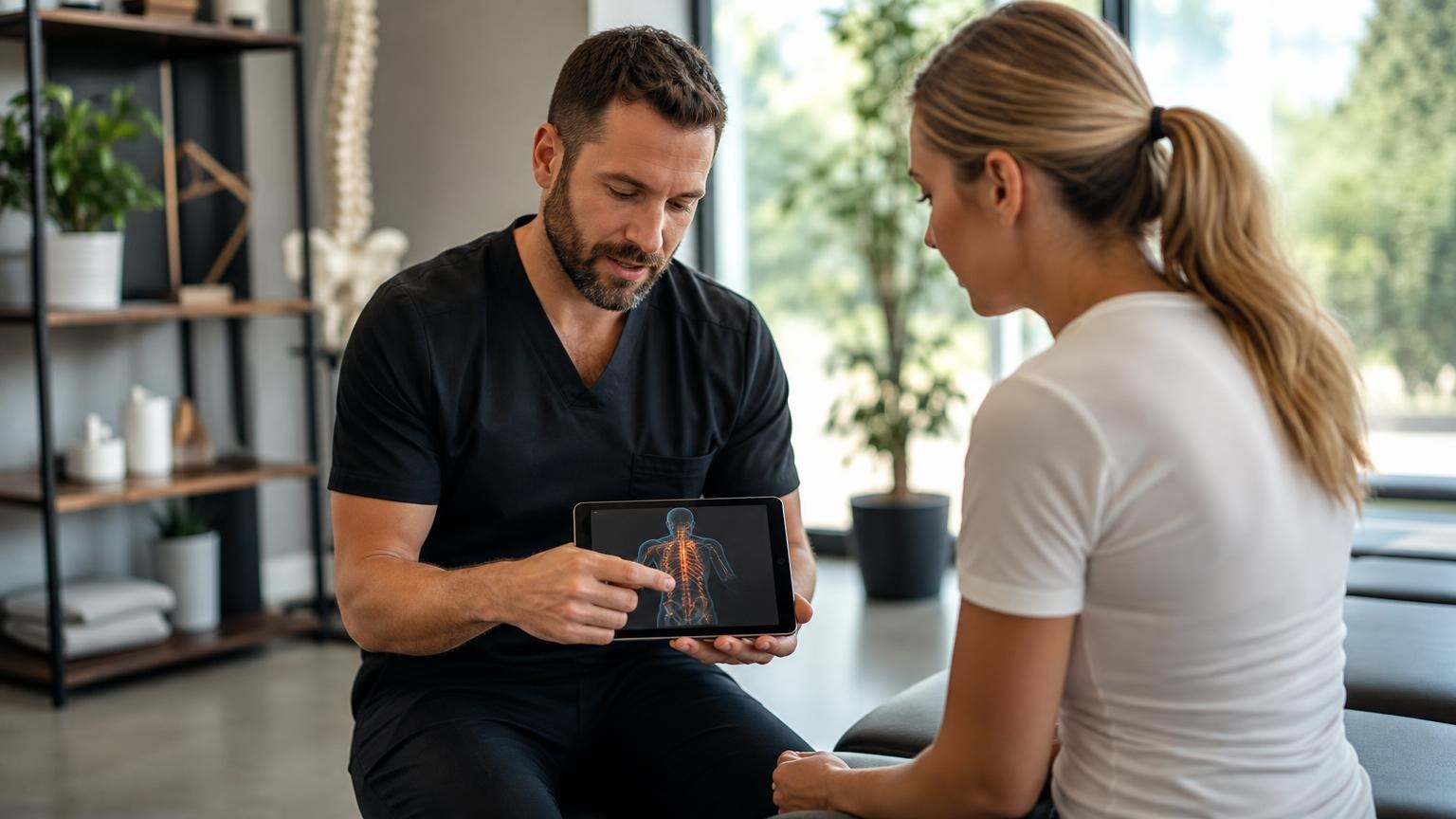
YouTube Marketing for Chiropractors: A Realistic Plan for Practice Owners
By Dr. Jeff Langmaid · · 10 min read
Chiropractor and Co-Founder of The Smart Chiropractor
Most practices that try YouTube quit within four months. They post eleven videos, watch the view counts sit in double digits, and conclude the platform doesn't work for a local business.
The mistake is treating YouTube like Instagram. On a social feed, a post has a lifespan of about a day and its performance is decided in the first hour. YouTube is a search engine that happens to serve video, and a video that answers a real question can pick up views for years. The two platforms reward opposite behaviors, and the practices that fail on YouTube are usually the ones succeeding at social.
This is a plan built for the way the platform actually works.
Set the expectation correctly first
You are not going to build an audience of a hundred thousand people, and you shouldn't try. A chiropractic practice serves a geographic radius of maybe fifteen miles. National reach is a vanity outcome.
What YouTube can realistically do for a practice:
Get found by people searching for their symptom. "Why does my lower back hurt when I sit" is a search with intent, and it's asked on YouTube constantly.
Convert people who already found you. A prospective patient who watches you explain something clearly has met you before they walk in. That materially changes the first visit.
Reduce load on your team. Every question your front desk answers forty times a year is a video that answers it once.
Give your other channels something to carry. This is the underrated one. A video is an asset your website, email, and ads all use. YouTube is where it lives; it isn't the only place it works.
A video with 300 views that brought in four patients over two years beat a video with 40,000 views that brought in none. Judge accordingly.
What to actually film
Four categories, in order of return.
1. Condition explainers
The core of the channel. One video per specific question, answered plainly.
Not "understanding back pain." Instead: "Why your lower back hurts more after sitting than after standing." "What that popping sound actually is." "Is it a pinched nerve or a muscle?" "Should you use ice or heat?"
Specificity is the whole game. A broad title competes with everything; a specific title matches an actual search someone typed.
Length: three to seven minutes. Answer the question in the first thirty seconds, then explain. People who came for an answer and got a two-minute preamble leave, and watch-time is what the platform ranks on.
2. "What to expect" videos
These are conversion assets, not discovery ones, and they punch far above their view count.
Film the first visit from the patient's perspective. What happens when you walk in. What the exam involves. What an adjustment feels like. What the costs look like and how payment works.
A meaningful share of people who never book are anxious rather than uninterested — they don't know what's going to happen to them. A three-minute video removes that. Put it on your website, in your new patient emails, and in your Google Business Profile.
3. Local and community
Lower volume, higher relevance. A video about the local high school's sports season, a segment on the ergonomics of a large employer in your town, a walk-through of your office.
These rarely rank nationally and that's fine — they're for the person who's already deciding between you and two other practices.
4. Patient stories
The most persuasive and the most legally constrained. Read the compliance section below before you film a single one.
How to actually rank
YouTube SEO is not mysterious, and most practices skip the parts that matter.
Title. Front-load the search phrase. "Pinched Nerve or Muscle Strain? How to Tell the Difference" beats "Dr. Smith Explains Nerve Pain." Write for the person searching, not for your own branding.
Description. The first two lines are visible before the fold — put a real summary there, not a wall of links. Then a fuller description with the phrase used naturally, and links to the relevant page on your site and your booking link.
Chapters. Timestamps in the description generate chapter markers. They improve watch-time because people jump to what they want instead of leaving, and they occasionally surface as separate results.
Thumbnails. More consequential than anything else on this list. A custom thumbnail with a legible three-or-four-word overlay and your face beats an auto-generated frame every time. Make them consistent so your videos are recognizable in a feed.
Captions. Upload a corrected transcript rather than relying on auto-captions. It's indexable text, and a large share of viewers watch without sound.
One video per question. Don't bundle six topics into one long video. Six videos each match a different search.
Local signals. Mention your city naturally in the video and the description where it's genuinely relevant. Don't stuff it — "Tampa chiropractor Tampa back pain Tampa" reads as spam to viewers and does nothing for ranking.
The part most practices miss
YouTube videos appear in Google search results, often above the written pages competing for the same query. For a local practice, this is the highest-leverage fact about the platform.
It means a well-titled video can occupy a search result you'd have no chance of ranking for with a blog post, because far fewer people are making video for these queries than are writing articles about them. The competition is thinner and the format is favored.
It also means video and written content aren't competing strategies. Film the video, then publish a written version on your site, and link them to each other. One piece of work, two chances to appear.
Production: less than you think, but not nothing
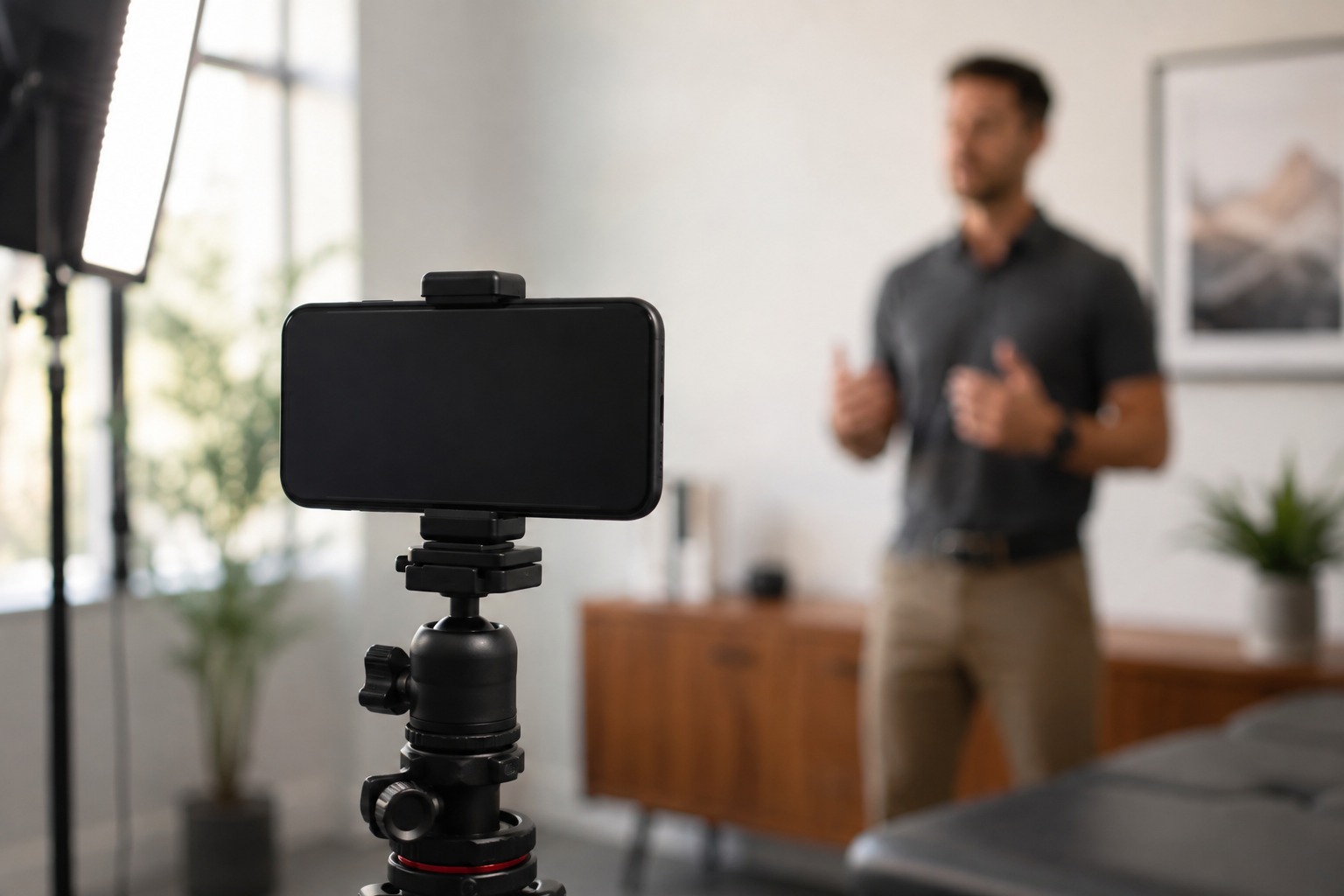
You do not need a studio. You do need three things.
Sound. The only place not to economize. A cheap lavalier or USB microphone is the single biggest quality upgrade available. People tolerate mediocre video and abandon bad audio within seconds.
Light. A window in front of you, or one inexpensive panel. Never a window behind you.
A stable camera. A recent phone on a tripod is genuinely fine.
Then batch. Block two hours, film six videos, change your shirt between a couple of them if you want the illusion of separate days. Filming one video at a time is the actual reason practices quit — the setup cost per video is too high to sustain weekly.
Edit lightly. Cut the dead air at the start and end, add captions, publish. Over-editing is another way to make this unsustainable.
Compliance: the two rules that matter
Two things to get right, and neither is complicated once it's set up.
Patient content needs a real HIPAA authorization. The Privacy Rule requires written authorization before using a patient's protected health information for marketing, and a standard photo or model release doesn't contain the required elements. Two practical notes people miss: patients visible in the background count as a disclosure, so film when the space is clear — and patients can revoke, so keep a way to take something down.
Get one properly drafted authorization form, use it every time, and this stops being a consideration. It's a one-afternoon problem, not an ongoing one.
Outcome claims follow the FTC's Endorsement Guides. If a patient describes an exceptional result you can't show is typical, say what the typical result is. Your state board likely layers its own advertising rules on top — worth reading once.
None of this should stop you filming. It just means patient stories are the one category with setup cost attached. Start with condition explainers and what-to-expect videos, which have none of these constraints and produce most of the return anyway, and add stories once your form is squared away.
Where the video pays off outside YouTube
The channel is a library, not the destination. Once a video exists:
- Embed it on the matching page of your site. A condition explainer belongs on the page about that condition.
- Send it in your patient emails. Video in onboarding sequences does the education a twelve-minute visit can't carry — the same argument behind automated patient communication generally.
- Use the good ones as ad creative. A video that already holds attention organically is a better starting point than something made for ads. See what actually works with Facebook ads for chiropractors for how that fits together.
- Put the what-to-expect video in your Google Business Profile and in your booking confirmations.
And if being on camera is the blocker — which for a lot of doctors it genuinely is — Avatar DC exists for that reason. It produces video without you filming, which won't replace a real explainer where your presence is the point, but it removes the excuse for the routine content that never gets made.
What to measure
Ignore subscriber count. It's the least meaningful number on the page for a local practice.
- Watch time and average view duration. These determine whether the platform shows your video to anyone. If people leave at forty seconds, fix the opening.
- Traffic to your site from YouTube. Findable in your analytics as a referral source.
- "How did you hear about us" answers. Add YouTube as an option at intake. Crude, and still the most honest attribution you'll get.
- Which videos convert. Views and bookings correlate weakly. A video with modest views on a high-intent query outperforms a popular general one, and you'll only know which is which if you ask.
Cadence, and how not to quit
One video a week for twelve weeks, then reassess. That's the minimum sample size to know anything.
Batch monthly. Four videos in one sitting, published weekly. Keep a running list of every question a patient asks you — that list is your content calendar, and it never runs out.
Slot this into the existing marketing calendar rather than treating it as a separate initiative. Standalone initiatives are the ones that die.
Expect the first ten videos to be bad. Everyone's are. The compounding only starts once there are enough of them that some rank.
Frequently asked questions
Do chiropractors get patients from YouTube? Yes, though usually indirectly. Videos are found by people searching symptoms, and they convert people who are already evaluating you. It is a slow, compounding channel rather than a fast one.
How long should a chiropractic YouTube video be? Three to seven minutes for condition explainers. Answer the question in the first thirty seconds; watch-time drives ranking and preambles cost you viewers.
Can I post patient testimonials on YouTube? Only with a valid HIPAA authorization containing the elements the Privacy Rule requires — a standard photo or model release is not enough. Outcome claims are also subject to FTC endorsement rules and your state board's advertising rules.
What equipment do I need? A decent microphone, a window or one light panel, and a phone on a tripod. Audio quality matters more than video quality.
Should I post Shorts or long-form? Long-form for search, which is where the compounding value is. Shorts can extend reach but they behave like a social feed — high volume, short lifespan, weak local intent.
How often should I post? Weekly, batched monthly. Consistency matters more than volume, and batching is what makes consistency survivable.
Start here
Write down the ten questions patients ask you most often. That's your first ten videos, and eight of them are searches somebody in your town is typing this week.
More of how we think about practice marketing, including the channels we think are overrated, goes out in our weekly email. We also cover a lot of this in conversation on the podcast.
See Patient Pilot on your own patient list.